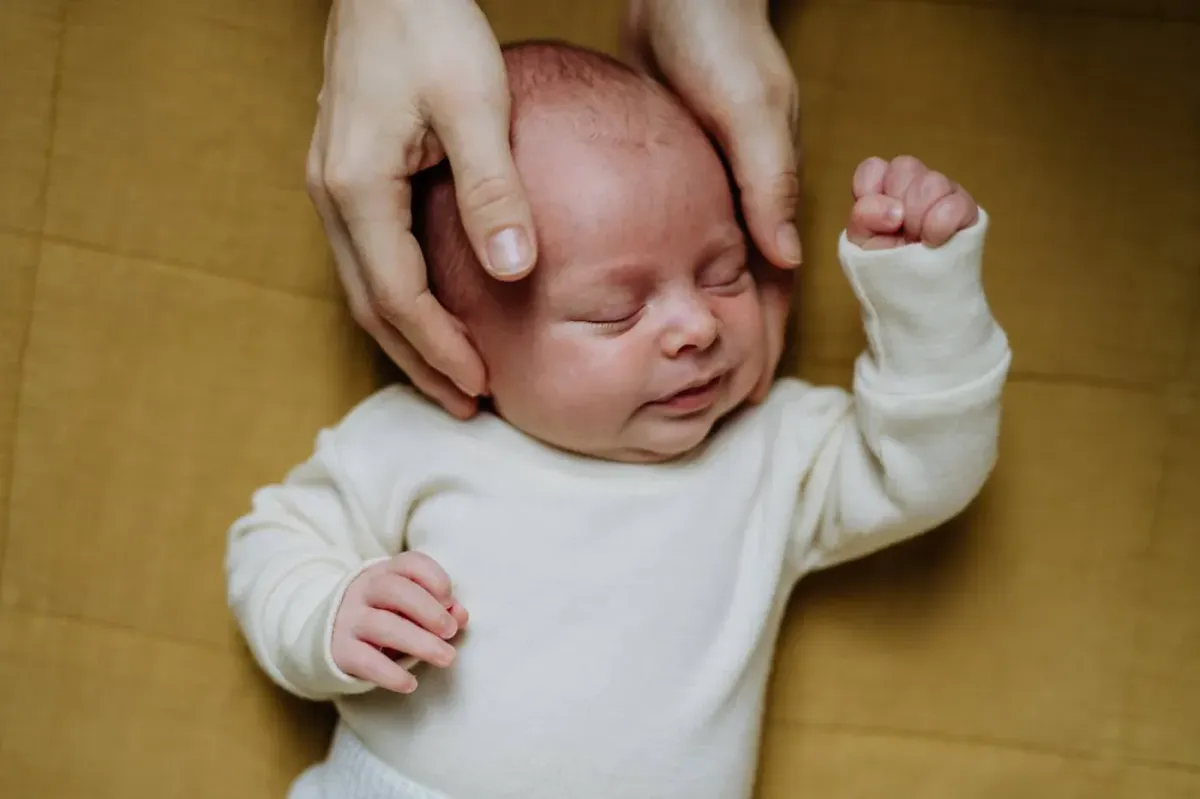
Torticollis In Infant And Why Chiropractic Matters
Is That "Cute" Head Tilt Actually Torticollis? What Every Parent Needs to Know
That cute little head tilt your infant is giving you may not be their signature photo pose. It could actually be a sign of a condition called torticollis.
While usually painless, torticollis isn't just a "cosmetic" issue or a phase babies grow out of. It's a neurological and biomechanical concern that directly impacts how your baby experiences and learns about the world. Unfortunately, reports show that many babies are getting referred for treatment much later than they should be.
Here is the "real deal" on infant torticollis and why addressing it early matters for your baby's development.
What exactly is Torticollis?

Torticollis, also known as wryneck, twisted neck, or simply head tilt, is when a newborn’s head seems permanently turned or rotated to one side. This happens because the muscles in their neck, and the joints underneath them, are restricted or tight.
It affects up to 16% of infants and is usually noticeable shortly after birth. Most of the time, infant torticollis is an isolated condition, meaning there isn’t a worrisome underlying issue—but that doesn’t mean we should “wait and see.”
Why Torticollis Affects More Than Just the Neck
Movement is the "language" of your baby's developing brain. In those first few months, babies learn by exploring: turning toward your voice, tracking your face across the room, and orienting themselves to sounds.
When an infant cannot fully turn their head, their brain receives incomplete and asymmetrical sensory information. Think of it like trying to learn about a room while only being allowed to look at one corner. Over time, this restriction can influence:
Visual Tracking: Difficulty coordinating eye movements.
Motor Milestones: Challenges with tummy time, rolling, or crawling.
Body Awareness: The brain "adapts" around the restriction, creating habits that are hard to break.
Why Stretching Isn't Always Enough
If you've Googled torticollis, you've probably seen a lot of advice about stretching. While stretching has value, muscles don't function independently of the joints or the nervous system.
If the tiny joints of the upper cervical spine (the neck) are restricted, the nervous system remains in a "guarded" state. This is why some babies seem to "fight" their stretches or why the tightness keeps coming back.
Chiropractic care addresses what stretching alone cannot:
Restores Motion: We gently help those joints move properly.
Calms the System: Once the joint moves, the nervous system stops "guarding" the muscle.
Clears the Signal: Symmetrical movement means the brain finally gets a clear, balanced picture of the world.
The Gentle Touch: Chiropractic for Infants

We treat your "bub" with the utmost care. Pediatric chiropractic is extremely gentle, specific, and developmentally appropriate. We use no more pressure than you'd use to check the ripeness of a tomato.
Our goal isn’t force; it’s function. We use light, precise movements and cranial techniques to help your baby’s body do exactly what it was designed to do: move freely.
Why Early Intervention Matters
Research consistently shows that early care leads to faster and more complete results. Addressing the "root cause" early before compensations become ingrained helps side-step compounding issues later, such as Flat Head Syndrome (Plagiocephaly) or persistent postural imbalances.
Seeking care isn't overreacting; it's advocating. Torticollis is about more than how your baby looks; it's about how they move, learn, and integrate into the world.
Is your baby favoring one side?
If you've noticed a head tilt, limited rotation, or uneven movement in your infant, we would be honored to walk alongside your family with gentle, specialized care.
Schedule a consultation today and learn how chiropractic care can be a foundational part of your baby’s torticollis care plan.
Our goal isn’t force; it’s function. We use light, precise movements and cranial techniques to help your baby’s body do exactly what it was designed to do: move freely.


